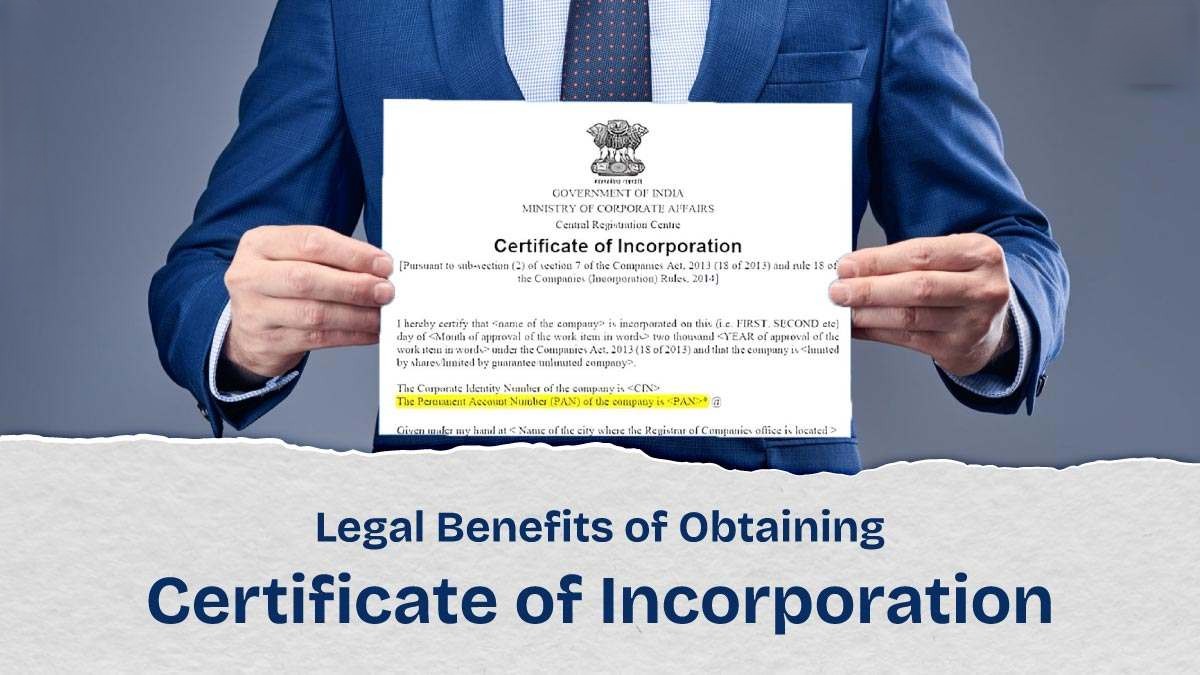
1. Incorporation of Companies & LLP
INCORPORATION OF COMPANIES
Incorporating a company is the legal procedure that establishes a corporate entity, thereby creating a separate legal "person" independent of its owners, shareholders, and directors. This process enables the company to own assets, enter into agreements, and initiate or face legal proceedings in its own name. In India, the incorporation process is regulated by the Companies Act, 2013, and facilitated through the Ministry of Corporate Affairs (MCA) portal. The primary tool used for this purpose is the Spice+ (Simplified Proforma for Incorporating Company Electronically) form.
Key Aspects of Company Incorporation
- Separate Legal Entity: Upon incorporation, the company becomes a distinct legal entity, separating the owners' personal assets from the business's liabilities.
- Limited Liability: Shareholders' liability is limited to the unpaid portion of their shares, ensuring their personal assets remain protected from the company’s debts.
- Perpetual Succession: The company's existence is not affected by the death, insolvency, or transfer of shares by its members, allowing it to continue indefinitely.
- Common Seal: As an artificial person, the company may use a common seal as its official signature.
Core Documents Required
- Memorandum of Association (MoA): Defines the company's constitution, objectives, and scope of operations.
- Articles of Association (AoA): Outlines the internal rules and regulations for management.
- Declaration of Compliance: A statement by a professional (CA, CS, or advocate) confirming all legal requirements are met.
Post-Incorporation Requirements
- Registered Office Verification: Filing the exact address within 30 days.
- Commencement of Business: A declaration (Form INC-20A) must be filed within 180 days to begin operations.
- Appointing an Auditor: Within 30 days of incorporation.
Types of Companies
- Private Limited Company: Minimum 2 members/directors; shares cannot be publicly traded.
- Public Limited Company: Minimum 7 members; shares can be traded publicly.
- One Person Company (OPC): A single owner (shareholder/director).
Advantages
- Capital Accumulation: Easier to raise funds through shares.
- Credibility: Higher trust among stakeholders.
- Transferability: Shares can be easily transferred.
Disadvantages
- High Costs and Complexity: Involves substantial legal and professional fees.
- Regulatory Compliance: Strict requirements for filing, auditing, and meetings.
- Lack of Secrecy: Public disclosure of financial information is mandatory.
INCORPORATION OF LLP (LIMITED LIABILITY PARTNERSHIP) FIRM
A Limited Liability Partnership (LLP) in India operates under the provisions of the Limited Liability Partnership Act, 2008. This business structure offers the adaptability of a traditional partnership while ensuring limited liability protection for its partners. As a distinct legal entity, an LLP is accountable for its own financial obligations, safeguarding the personal assets of its partners from any liabilities the firm incurs. Below is a brief outline of the process to incorporate an LLP:
Key Requirements
- A minimum of two partners is needed, with at least two individuals as designated partners.
- One designated partner must be an Indian resident.
- Designated partners require a Digital Signature Certificate (DSC) and a Designated Partner Identification Number (DPIN) for the online process.
- The LLP name must be unique and end with "LLP" or "Limited Liability Partnership".
Key Features and Benefits
- Partners have limited liability up to their contribution.
- The LLP is a separate legal entity with perpetual succession.
- There is no minimum capital requirement.
- LLPs have lower compliance costs compared to private limited companies.
Potential Disadvantages
- Penalties can be incurred for not filing annual returns.
- Raising capital can be challenging as LLPs cannot issue equity shares.
- The LLP may face dissolution if the number of partners drops below two for six months.