
RBI Update
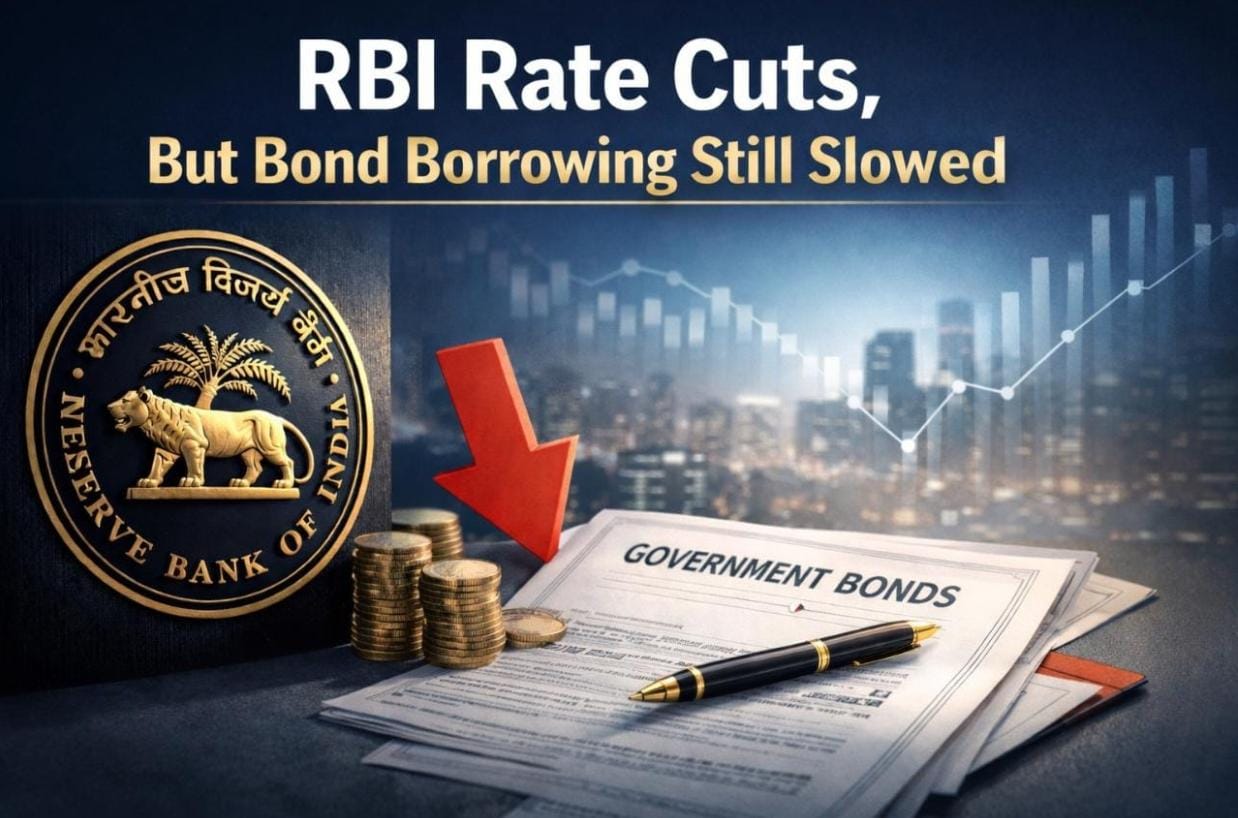
Why are Indian companies raising LESS money through corporate bonds this year?
First: What is a corporate bond?
When a company needs funds, it can either:
Take a loan from a bank, or
*Borrow directly from investors by issuing bonds
A corporate bond simply means:
> The company borrows money from investors, pays interest, and repays the amount later.
What did RBI do this year?
To support borrowing, RBI:
* Cut interest rates by 1.25%
* Injected additional liquidity into the banking system
* Relaxed certain lending norms for banks
In theory, this should have made bond borrowing cheaper.
But that did not fully happen.
What actually happened?
* Corporate bond borrowing fell by around 6% compared to last year
* More companies accessed the bond market
* But they raised smaller amounts overall
Why borrowing looked strong early in the year
April–June period:
* Companies expected interest rates to fall further
* Bond yields were already softening
So many companies decided to borrow early, saying:
> “Let’s raise funds now before conditions change.”
Result:
* Very strong bond issuance in the first quarter
* Weak bond activity in later months
Global shocks changed the situation
After June, global uncertainty increased:
US imposed 50% tariffs on Indian goods
* Rupee weakened
* Foreign investors turned cautious
When global risk rises, market interest rates tend to move up.
Heavy government borrowing pushed yields higher
At the same time:
* Central government issued large volumes of bonds
* State governments also increased borrowing
Simple rule:
More bonds in the market = higher interest rates
So:
* Government bond yields rose
* Corporate bond yields also moved up
If RBI cut rates, why did bond interest rise?
This is the key point:
* RBI controls short-term interest rates
* Long-term rates are decided by the market
Markets reacted to:
* Heavy government borrowing
* Global uncertainty
* Weak rupee
Result:
* Long-term bond yields remained high
* Corporate bonds did not become cheap
Bank loans became cheaper than bonds
* Bank lending rates came down
* Corporate bond yields stayed elevated
So companies compared:
Bank loans = cheaper
Bonds = expensive
Decision was straightforward:
> Why issue bonds when bank loans are cheaper?
Many companies:
* Cancelled bond issuances
* Shifted borrowing to banks
Even banks issued fewer bonds
Banks themselves:
* Had sufficient deposits
* Received liquidity support from RBI
* Did not need to raise funds via bonds
Since banks are major bond issuers, their reduced participation further slowed the bond market.
Long-term borrowing became costly
Companies looking to borrow for:
* 10 years
* 15 years
* 20 years
Found that:
* Long-term bond yields were too high
* Cost of borrowing was unattractive
As a result, long-term bond issuance declined sharply.
Companies used alternative funding sources
Instead of bonds, companies preferred:
* Bank loans
* Foreign borrowings
* Syndicated loans
These options were:
* More flexible
* Sometimes cheaper
* Easier to manage
What could happen next Experts expect:
* Continued RBI liquidity support
* Stronger bank lending capacity
* Possible slowdown in government borrowing
This may gradually ease bond yields and revive corporate bond issuance.
Bottom Line
Despite RBI rate cuts, global uncertainty, heavy government borrowing and cheaper bank loans kept corporate bond yields high. As a result, companies reduced bond borrowing and shifted towards bank loans and alternative funding sources.